Tuesday, December 15, 2009

Space jellyfish


Hubble spots ‘space jellyfish, cosmic blobs


This "space jellyfish" is one of several new protoplanetary discs, or proplyds, discovered in the Orion Nebula. The objects are so far away that even with Hubble's keen eye, they appear blurry.
An odd array of 30 newly released images from the Hubble Space Telescope reveal planetary systems in the making.
The blobs and smudges, as astronomers described them, sit in the widely photographed Orion Nebula. Each object is known as a proplyds, or protoplanetary discs, and could be forming planets as you read this.
Among the images is one astronomers called a "space jellyfish." Its odd shape is created by shock waves that form when a wind of particles from a nearby massive star collides with the material of the proplyd.
The Orion Nebula is known to be a hotbed of star formation. Our own sun might have developed in a similar dense cloud of gas and dust, before being kicked out to its current lonely existence.
In the nebula, newborn stars emerge from the nebula's mixture of gas and dust, and the proplyds form around them. The center of a disc, which is rotating, heats up and becomes a new star, but remnants around the outskirts of the disc attract other bits of dust and clump together, astronomers explained.
Each developing planetary system has its own look. Some of the discs appear face-on, and others edge-on. Some have emerging jets of material.
Visible to the naked eye under very dark sky conditions, the Orion Nebula has been known since ancient times and was first described in the early 17th century by the French astronomer Nicolas-Claude Fabri de Peiresc. At 1,500 light-years away, it is the closest star-forming region to Earth.
The new collection of photographs will help astronomers better understand the planet-formation process, researchers said in a statement today.

Monday, December 14, 2009

Amazing little girl

This little girl only 6years old and eats several times in a day never say no to her mother for any food stuff. Her mother says that approximately she eats 20 Roti in a day. These type of cases are very rare in the world and according to the child specialist he says that it's an eating disorder and in eating disorder it may be any type of it.
It can be prevented by taking care of this girl in giving food everyday.


PM Gillani Double Policy


Gillani Backtracking

Pakistan's Prime Minister Yousaf Raza Gilani made a U-turn Saturday -- first declaring that the military offensive against Islamic militants in South Waziristan had ended, then saying there is no timeframe for its completion.
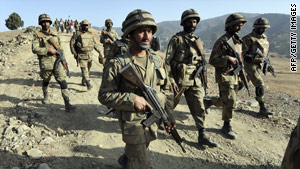
The Pakistani army is conducting an intense operation to rout militants from their haven along the country's border with Afghanistan. The militants, in turn, have launched a series of deadly attacks in retaliation.
Answering a question from a reporter who asked whether the government will engage in dialogue with the Taliban in South Waziristan, Gilani said the operation was over.
"There was talk of dialogue even during the Malakand Operation. But now, the operation in South Waziristan is over. In fact, at the moment, there is talk of an operation in Orakzai Agency," he said.
Malakand is another operation that the military is conducting in another region. Orakzai is one of seven districts that make up the Federally Administered Tribal Areas of Pakistan. Like South Waziristan, it is also considered rife with militants.
Gilani's comments, made in the eastern city of Lahore, were aired on national television. But hours later, he backtracked.
"It could have been in a different context," he told reporters in Karachi. These remarks were also aired on television.
Gilani also declined to say when the offensive might end.
"We will take military action wherever we get information about the presence of militants," he said.
When reached for clarification, the prime minister's office pointed CNN to the second statement.
The army did not comment on Gilani's remarks. A release it sends out daily made no mention of an end to the offensive on Saturday.
Instead, Saturday's release provided the usual breakdown of operations in various parts of the country, including South Waziristan.

Sunday, December 13, 2009

Iran exchange Uranium for Fuel


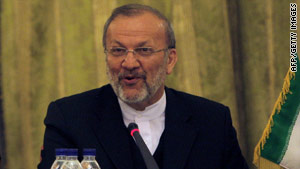
Iran is ready to give up some enriched uranium in exchange for fuel that would power a reactor used in cancer research, the country's foreign minister said Sunday, according to Iranian media. "We have explicitly declared that Iran is ready to exchange some 400 kilograms of 3.5 percent enriched uranium in Iran's Kish Island and receive 20 percent enriched fuel," Manouchehr Mottaki said, according to state-run Islamic Republic of Iran.
The report offered no further details on the plan.
The United States and other leading nations have been negotiating with Iran to send low-enriched uranium abroad, where it would be turned into material for use at the reactor.
The International Atomic Energy Agency, the U.N. nuclear watchdog, has proposed that Iran send low-enriched uranium to Russia and then France for processing.
But a senior State Department official told CNN Iran's proposal does not appear to be consistent with the IAEA draft agreement.
"The terms of that agreement call for Iran to send 1,200 kilograms of its low-enriched uranium to Russia in one batch, where it would be further enriched and then sent to France for fabrication into fuel assemblies," the official said.
"We remain committed to these terms. Unfortunately, Iran has been unwilling to engage in further talks on its nuclear program.
"The draft agreement reflects an extensive effort by the IAEA, Russia, France and the United States to respond positively to Iran's request for fuel for the Tehran Research Reactor, which produces medical isotopes," the official said.
"It also offers an opportunity for Iran to begin to build confidence in the peaceful nature of its nuclear program. We urge Iran not to squander this opportunity."
The deal could reduce the amount of material Iran has to make a nuclear bomb. America and some of its allies fear Iran's goal is to produce a nuclear bomb, but Tehran has insisted its nuclear program is only for peaceful purposes.
Mottaki, attending the Manama Security Meeting in Bahrain, said Iran has fully cooperated with the IAEA and is ready to continue its "constructive cooperation" with the so-called "P5+1" -- the United States, Russia, China, Britain, France and Germany, according to IRIB.
Nuclear weapons have no place in Iran's defensive doctrine, he said, and Tehran believes the era where nuclear weapons were effective leverage has come to an end, IRIB reported.
Last month, the IAEA board passed a resolution demanding that Iran stop construction on a once-secret nuclear enrichment facility near the Iranian city of Qom.
Thirty-five countries, including Russia and China, backed the measure, which also demanded that Iran stop uranium enrichment, which can be used for producing fuel for a nuclear weapon. Russia and China previously had resisted the push for imposing stronger sanctions on Iran.
In the wake of that resolution, Iran announced its Cabinet had authorized the construction of 10 new nuclear production facilities.
The White House warned Iran earlier this month it faces further sanctions if it does not abandon its enrichment activities and "forsake their nuclear weapons program," spokesman Robert Gibbs said.
The outgoing head of the IAEA, Mohamed ElBaradei, told CNN's Christiane Amanpour last month that timing is the top issue delaying a nuclear deal between Iran and the international powers.
Rather than sign on to the draft agreement outlining the swap plan, he said, Iran wants to ship out low-enriched uranium and simultaneously get back more enriched material, which would enable it to receive the fuel more quickly, ElBaradei said.
In his final report to the IAEA's governing board, ElBaradei said the agency had been able to verify that no known stocks of nuclear fuel had been diverted from authorized uses in Iran. But, he said, inspectors "have effectively reached a dead end" without further cooperation from Tehran.
On Sunday, Iran's parliament speaker, Ali Larijani, said in an address to lawmakers that ever since the 1979 Islamic Revolution, Iran has been targeted by enemies of Islam, including the United States and its allies.
"Mr. Obama's cheap remarks about IRI's (Islamic Republic of Iran's) internal affairs, as well as U.S. minister of state's statements accusing Iran of supporting terrorism all reveal their worries about IRI's increasing influence in the region," Larijani said.
On the nuclear issue, he said the United States and others don't want Iran to continue its nuclear activities under the framework of the IAEA.

Wednesday, December 9, 2009

Is it the roots of Pakistan?


David Headley, the Chicago, Illinois, man appearing in court Wednesday in connection with terror attacks in India, was born Daood Gilani, the son of a prominent Pakistani broadcaster, according to his half-brother.
He grew up in both the United States and Pakistan, with a parent from each country.
Headley's father, Syed Saleem Gilani, was working for the U.S.-government-funded Voice of America when Headley was born in 1960 in Washington, his half-brother Danyal Gilani said in a statement.
Headley's mother was American, and his parents divorced after they moved to Pakistan together, not long after Headley was born, his half-brother said. He did not name the mother.
His mother returned to the United States, but Headley remained in Pakistan, his half-brother said, citing "family elders." Headley went to high school at the Hassan Abdal Cadet College in Pakistan, Gilani and an FBI complaint against Headley indicate.
At some point after high school, Headley moved back to the United States to be with his mother, and has had little contact with his Pakistani family since then, Gilani said.
Gilani last saw Headley, whom he still refers to as Daood, "when he visited Pakistan a few days after my father's death, nearly a year ago."
He got a Social Security number in Pennsylvania sometime in the late 1970s, public records show.
He changed his name from Daood Gilani to David Headley on or about February 15, 2006, in Philadelphia, Pennsylvania, in order to present himself in India as an American who was neither Muslim nor Pakistani, according to the criminal complaint against him.
"His having another name or changing his name at some stage in life has come as a surprise to me. He has four kids and a Pakistani wife who also live in the United States," said Danyal Gilani, a public relations officer for the Pakistani prime minister's office.
He issued a long statement last month distancing himself from his half-brother, in response to reports in the Indian press trying to link Headley to Pakistan's prime minister, whose last name also is Gilani. But Danyal Gilani said his family was not related to the prime minister, Yousuf Raza Gilani.
Headley was arrested by federal agents on October 3 in Chicago, accused of helping plan terror attacks against a Danish newspaper that ran cartoons of the Prophet Mohammed, sparking Muslim anger worldwide.
He was later linked to the bloody four-day terrorist siege in Mumbai, India, in November 2008 in which 160 people were killed.
The Justice Department accuses him of attending terrorism training camps in Pakistan in 2002 and 2003, and working with the group Lashkar-e-Tayyiba to carry out terror attacks.
The United States lists Lashkar as a terrorist organization. India blamed the group for the Mumbai attacks.
At the time of his arrest October 3, Headley was on his way back to India to plan a second attack, a source close to the investigation said. Headley is cooperating with the authorities investigating both terror plots, the Justice Department has said. His lawyer did not dispute that. Abdur Rehman Hashim Syed, a retired major in the Pakistani military, was also charged with conspiracy in planning to attack the Danish newspaper. So was Tahawwur Hussain Rana, whom U.S. authorities identify as a Pakistani native and Canadian citizen who lives mainly in Chicago.
Headley said he worked for First World Immigration Services, a company owned by Rana, though authorities have said in court papers that surveillance showed that he "performs few services" for the company.

Friday, December 4, 2009

Obama's Plans for Afghanistan


Secretary of State Hillary Clinton rejected suggestions Friday that the Obama administration plans to abruptly cut and run from Afghanistan.
She emphasized that the transition to total Afghan power will be gradual and responsible.
"I want to make clear to the people of Afghanistan and Pakistan that we're looking for a long-term partnership," said Clinton, speaking with CNN's John Roberts in a wide-ranging interview about U.S. policy toward Afghanistan and Pakistan.
When President Obama announced sending 30,000 more troops to Afghanistan, he said he intended "to begin the transfer of our forces out of Afghanistan in July of 2011" in a responsible transition that considers "conditions on the ground."
Questions were raised about whether such a time frame was long enough to get the job done.
Clinton defended the policy, stressing the conditions-based aspect of the plan and stressing that if it is carried out responsibly, security duties could start being transferred gradually to Afghan forces in some locales, and U.S. troops could begin returning home.
Attending the NATO foreign ministers meeting in Brussels, Clinton said the plan combines a swift show of force and a "sense of urgency." She said Afghan President Hamid Karzai and several NATO foreign ministers agreed with the approach.
"We are going to be looking at all 34 provinces. Some are ... ready to be transitioned, in our opinion, now. [In] others, there's heavy combat going on," she said.
Clinton outlined three facets of the Afghan policy: Fighting, training and civilian engagement.
"There are combat troops, people who are there fighting the Taliban, reversing their momentum. There are trainers of both the security forces, including the army and police. We imagine that their mission will continue. And then there are the all the civilian efforts, which we intend to make a long-term commitment to continuing."
But she said that United States won't de-emphasize its involvement in the region as it and other countries had after the 1980s -- when the United States helped mujahedeen fight the Soviets who controlled Afghanistan at the time.
"Our analysis of what happened in Afghanistan and Pakistan very clearly demonstrates not only that the United States, but the international community, just sort of said, 'OK, the job is done, Soviet Union is gone.' And we walked away, leaving a very difficult and increasingly dangerous presence in both Afghanistan and Pakistan," she said.
The tenacious Taliban and al Qaeda are the entities that the international and Afghan forces are trying to corral in battle. But one tack mentioned recently is diplomacy with the Taliban itself.
Asked about Karzai's comment that he would be willing to hold talks with Taliban leader Mullah Omar, Clinton said she is "skeptical about that" but it's still "worth exploring."
"We have no evidence that Omar is interested in speaking to Karzai or anybody else. If they were willing to speak, that would denote a dramatic 180-degree change from where they've been.
"Remember the U.S. government asked Mullah Omar to give up the [Osama] bin Laden leadership of al Qaeda after we were attacked on 9/11. If they had done so, we would not be in Afghanistan today."
Clinton said there needs to be a "distinction between the potential reintegration of a lot of the people who are part of the Taliban" but aren't hardcore. She said people who would be reintegrated into society from the battlefield would have to renounce al Qaeda and get on board with the post-Taliban Afghan political system.
A major part of the fight in Afghanistan is the battle against militants in neighboring Pakistan, where -- as Clinton says -- "terrorists go back and forth" across a "porous border" for safety.
"We can't let Afghanistan become a failed state, because then, Pakistan would then be under greater pressure than it is today, from insurgents within its own borders.
"And we want to work with Pakistan to be able to root out, capture and kill the al Qaeda leadership and their allies. So this really is a regional strategy. It is integrated to be more effective than what we've seen before."
Asked about reports that the United States is conducting a secret war in Pakistan with drone strikes, Clinton said, "if there is such a secret program, of course, I'm not going to talk about it."
But she said there is "increasingly close cooperation between our two countries -- Pakistan and the United States -- against a common threat and a common enemy" and noted that such ties didn't "exist when President Obama took office."
"There are many elements to a war against terrorists. There is, as we are doing now in Afghanistan, a very direct confrontation. As we see in Pakistan, there is support which the United States and others are providing to the Pakistani military and government. So there are many different tools in the tool box," she said.
In the past, Clinton said, the Pakistani power structure regarded militants in the country as useful, but she said she believes that kind of attitude is ending, illustrated by the Pakistani military's offensives in the Swat Valley and South Waziristan this year.
Asked about talk that Mullah Omar and bin Laden are in and around Pakistan, Clinton said, "We're taking that very seriously. And we've had eight years. They should have never gotten out of Afghanistan in the first place.
"But if I could dial the clock back, I think everybody would see different decisions made. But where we are today is an Afghan-Pakistan awareness that these militants are threatening both, and we're going to see more action, I believe, from the Pakistanis, to confront that."
Clinton also said there have been efforts to halt funding of militants from private sources in the Gulf states.
"We have really good evidence that we've begun to cut off the funding sources. But look, money is fungible, money doesn't necessarily go into a bank and then get cashed. It gets carried in bundles of cash by couriers to al Qaeda in their safe haven. So we know that this is an area that needs more help, but we've gotten some good progress there, too. "
Asked how she defines success for Afghanistan, Clinton says it's "broader than a military victory."
"Success is a stable, secure, and peaceful ... Afghanistan -- able to defend itself and provide a democratic, positive future for their people," she said.
Disarmament of militants and the creation of "one legitimate source of military power" are objectives.
"And that's a long way from being possible in Afghanistan. But those are the kinds of goals that we are working towards."


Thursday, December 3, 2009

Imagine Oil prices stop point?


"With oil supplies rising and the economy becoming ever more efficient, a super-spike in prices is looking increasingly unlikely"

Because oil prices have always been directly related to the strength of the economy, a recovery might have seen headlines like these:

• The recession ends: Get ready for $100 oil

• The economy roars: $140 oil, is there an end in sight?

• Everyone in China buys a Cadillac: World tapped out

But a growing number of experts are saying that you can forget all that. For the next couple of years, they say, oil prices will remain well below $100 a barrel as the economy remains fragile and efficiency measures kick in.

"The world will never run out of oil," Deutsche Bank analysts wrote in a recent research note, echoing the old logic that the Stone Age didn't end because the world ran out of stone. "If the oil age does end, it likely will be because we become more efficient and simply use less petroleum."

It's this "becoming more efficient" idea that the Deutsche Bank analysts use to predict even lower oil prices in 2010 than now - an average of $65 a barrel next year compared to nearly $80 currently.
'Drill baby, drill'...no more

To get there, they employ a metric known as energy intensity, which basically measures the amount of oil used in relation to the size of the economy. (Keep an eye on this term in the next couple of weeks - countries at the upcoming Copenhagen summit on climate change will use it to try to wiggle out of making any hard commitments on cutting greenhouse gases.)

The energy intensity of the U.S. economy has actually dropped by about 2% a year every year since the early 1980s. In the next couple of years Deutsche Bank expects it to decline by around 3% as people buy more fuel efficient cars and respond in other ways to the high prices of 2004-2008 and as government conservation measures kick in.

With economic growth expected to remain at a sluggish 2.5% or so over the next couple of years, that translates into an actual drop in U.S. oil consumption.

"US oil demand may have already peaked," the note said.

The bank's numbers aren't far off from what the government is saying either.

U.S. oil consumption, which peaked at almost 21 million barrels a day in 2005, is now under 19 million barrels a day, according to the Energy Information Administration.

"The last time we had a decline in consumption of this magnitude was 1979-82," said Tancred Lidderdale, an oil analyst at EIA. U.S. oil demand isn't expected to near 21 million barrels a day again until 2029.

Tuesday, December 1, 2009

Nuclear threats to Iran


Iran will take legal action over infringements on its rights to develop nuclear power, the country's foreign minister said Tuesday, a day after the country announced plans to build 10 new nuclear plants.

"We will not do away with our rights," Foreign Minister Ramin Mohnmanparas said at a news conference, without clarifying what legal action meant.

He did say that Iran would write letters of protest to nations that backed a U.N. resolution of rebuke over Iran's nuclear program.

Mohnmanparas accused such countries of politicizing nuclear fuel as a way to meddle in his country's domestic affairs.

"We will elaborate on why their decisions were incorrect, and how to correct and what the consequences might be," he said of the letters.
The U.N.'s nuclear watchdog, the International Atomic Energy Agency, on Friday passed a resolution demanding that Iran stop construction on a once-secret nuclear enrichment facility in the Iranian holy city of Qom. Twenty-five countries backed the measure, which also demanded that Iran stop uranium enrichment, which can be used for producing fuel for a nuclear device.

In the resolution's wake, Iran's state news agency reported Sunday that the nation's Cabinet had authorized the construction of 10 new nuclear production facilities.

At Tuesday's news conference in the Iranian capital, Tehran, Mohnmanparas said his country needs nuclear fuel from the plants to meet its long-term energy needs, to move toward self-sufficiency.

"The plans we have, we will push our plans ahead," the foreign minister said. "We will adhere to IAEA framework and under their supervision.

"We remain committed to the NPT," he added, referring to the 1968 Non-Proliferation Treaty, which bars member states from pursuing nuclear weapons and requires international inspectors to have access to nuclear facilities. The treaty gives Iran the right to produce nuclear fuel, Iran says.

Tehran says the plants authorized Sunday would produce enough enriched uranium to yield about 20,000 megawatts of electricity a year. Iran currently has one nuclear power plant, which has yet to begin full operation.

By comparison, 65 nuclear power plants in the United States produced about 800,000 megawatts of power in 2007, according to the U.S. Department of Energy.

In his final report to the IAEA's governing board, outgoing Director-General Mohammed ElBaradei said Thursday that the agency has been able to verify that no known stocks of nuclear fuel have been diverted from authorized uses. But he said inspectors "have effectively reached a dead end" without further Iranian cooperation.

Susan Rice, the U.S. ambassador to the United Nations, said Monday that, in the United States' view, "as Iran makes choices that seem to indicate that it is not at this stage ready and willing to take up the offers on the engagement track, then we will put greater emphasis on the pressure track."

The "pressure track" is often code language for the pursuit of further U.N. Security Council sanctions.

Friday, November 27, 2009

Safety Measures of Pakistan Nuclear Weapons


Pakistan's Nuclear Weapons News:

With the assault on the office of the Inter-Services Intelligence (ISI) in Peshawar on 13 November 2009, which left at least 20 people dead, including 10 ISI officials, the Taliban-Al Qaeda nexus has once again demonstrated that it is capable of hitting the supposedly well-guarded targets representing the power and authority of the state. A few weeks earlier, they were able to deceive the guards at the entry of the citadel of the Pakistan army, the General Headquarters, in Rawalpindi. On that occasion, more than 40 people were taken hostage, of whom 37 were rescued due to a daring operation by the commandos of the elite Special Services Group.

The Head Office of the Federal Investigation Agency in Lahore was bombed in October this year. A similar attack took place in 2008. Since 2007, attacks have been launched on military, air force and naval personnel and officials. On the other hand, the media also reported that some terrorists had tried to enter the restricted area where the nuclear facilities are located, but they were stopped at the outer security ring.

Report on Safety and Security of Pakistan’s Nuclear Weapons

In his detailed report published in the New Yorker dated 16 November 2009 (though it was already made public a week earlier), Seymour Hersh claims that the United States was doing all it could to ensure that Pakistan’s nuclear warheads were safe and secure. He referred to United States President Barack Obama’s response to a question by a journalist about the safety of those weapons. President Obama reportedly said that the United States wanted to “make sure that Pakistan’s nuclear arsenal is secure – primarily, initially, because the Pakistan army, I think, recognises the hazards of those weapons falling into the wrong hands.”
Some of Hersh’s assertions put the Pakistanis in an awkward and deeply embarrassing position. For example, a spokesman for Admiral Michael Mullen, the chairman of the Joint Chiefs of Staff, told Hersh that Admiral Mullen was deeply involved in day-to-day Pakistani developments and “is almost an action officer for all things Pakistan”. However, Admiral Mullen denied that he and General Ashfaq Parvez Kayani Pakistan’s Chief of Army Staff, or their staffs, had reached an understanding about the availability of American forces in case of a mutiny or a terrorist threat to a nuclear facility. “To my knowledge, we have no military units, special forces or otherwise, involved in such an assignment”, Admiral Mullen is reported to have said through his spokesman. The report informs that, for the last three years, the United States and Pakistan have been working very closely on the nuclear weapons issue.

In light of conflicting reports, one wonders who should be believed – the American journalist Hersh, who has suggested that the United States is seeking a greater role in the protection of Pakistan’s nuclear weapons from terrorists or the angry refutation by the Chairman of the Joint Chiefs of Staff Committee, General Tariq Majid, who dismissed Hersh’s report as sensational and mischievous. He reportedly said that, “We have operationalised a very effective nuclear security regime, which incorporates very stringent custodial and access controls. As overall custodian of the development of [the] strategic programme, I reiterate in very unambiguous terms that there is absolutely no question of sharing or allowing any foreign individual, entity or a state, any access to sensitive information about our nuclear assets” (The News, 10 November 2009).

Possible Scenarios

Hersh considered a number of scenarios that could plunge regional and world peace into jeopardy. The most serious was the possibility of a mutiny within the military stationed at the Pakistan nuclear weapon sites. It was based on the assumption that support for radical Islam and sympathy for the Taliban-Al Qaeda ideology could exist even among soldiers and officers stationed in places where the weapons are kept. When Hersh probed that possibility with military officers who he claimed to have spoken to, they rejected such a turn of events. They told him that the personnel working in such places were thoroughly scrutinised and those whose ideological orientation or mindset was suspect were screened out.

Moreover, Hersh was told that the nuclear devices are kept in deep tunnels that can never be detected by spy satellites. Even more importantly, the procedure adopted to make the nuclear weapons operational is exceedingly complex. The different elements and parts of a nuclear bomb are kept apart from one another. In order to use these devices, they needed to be assembled in one place. The procedure has been streamlined and, in case of a war or some threat to national security, a select group of military personnel could quickly make them operational.

The United States and Pakistan’s Sovereignty

It may be recalled that a controversy raged in Pakistan recently over the Kerry-Lugar Bill, which was attacked by right-wing media and politicians as an invasion of Pakistani sovereignty. Hersh’s report suggests that the Americans are determined to take control of Pakistan’s nuclear assets. In one sense, it gives credence to the conspiracy theory that the Americans are out to nullify Pakistani sovereignty and security – the nuclear weapons epitomising sovereignty and security!

It is, therefore, not surprising that it was not only a top Pakistani military officer who refuted the claim that the terrorists could get hold of Pakistani nuclear weapons; Pakistan’s President Asif Ali Zardari, the Federal Minister of Information, Qamar Zaman Kaira, and the Pakistan Foreign Office also issued similar statements. Their standpoint was supported by statements issued by the United States Secretary of State, Hillary Clinton, and the United States’ Ambassador to Pakistan, Anne Patterson.

Will this latest controversy subside now that the power holders on both sides are singing the same refrain or will it only adversely affect the United States-Pakistan alliance against terrorism? That remains to be seen.

However, this is not the most interesting aspect of the recent controversy.

The most crucial problem policymakers have to face in the current situation is that the Taliban-Al Qaeda network will not hesitate to try anything to stop the offensive launched against them by the Pakistan military and to force the American and North Atlantic Treaty Organisation forces to pack up and leave Afghanistan. There are good reasons to believe that General Majid is speaking with sincerity that only those which the military has already included in the core group, who, in case of an emergency, will make those weapons operational, can access them unless that core group itself is eliminated. Arguing thus, he assured that it was not possible to reach the nuclear warheads and use them because all precautions have been taken to prevent that from happening.

Rational men in command positions in the Pakistani military who are in charge of the nuclear assets know that if they use such weapons, there would inevitably be a similar retaliation. The destruction and suffering that will follow in such a situation will defy imagination; hence the assumption is that while nuclear weapons are not usable, they guarantee peace. However, from the die-hard Islamist point of view, such reasoning may not carry much persuasive power.

Moreover, no watertight, foolproof guarantee can be provided by any nation or military that some mad men in their midst would never be able to get hold of such weapons and use them. Such a danger is present in all circumstances and, therefore, the Pakistani explanation is convincing on its own merits.

There is, however, no reason to believe that the Americans would not be interested in getting as accurate as possible knowledge about those weapons because, in case the unimaginable happens and hardcore Islamists do manage to get hold of them, regional and world peace would be gravely threatened. Some time ago, Rowan Scarborough, a journalist with Fox News, reported that three attempts have already been made by terrorists to get to Pakistan’s nuclear assets. Under the circumstances, the United States has a detailed plan to rapidly deploy the Joint Special Operations Command, a super-secret commando unit headquartered at Fort Bragg, North Carolina, in Pakistan to take control of Pakistani nuclear weapons in case Pakistan was destabilised and extremists come to power. Some rumours suggest that an elite commando force is already stationed in Afghanistan for such an undertaking.

Decline of Pakistan

It is truly very sad that Pakistan should end up in such a sordid and profoundly dangerous situation. In the mid-1960s, Pakistan was being celebrated as the paragon of economic development that many nations, including South Korea, Singapore and Malaysia keenly studied, but after the 1965 war with India, Pakistan could not return fully to the path of peaceful development and change.

The military defeat at the hands of India in 1971 in the former East Pakistan, which broke away to become Bangladesh, played a most vitiating role in accentuating a belief in the need for an Islamist orientation of the armed forces. Such a mindset reached consummation during the Afghan jihad of the 1980s. It set in motion a process that inevitably took it down the path of violent politics, which undermined the social peace within Pakistan and created dangerous situations of a military confrontation with India.

Until the beginning of the 1980s, Pakistan’s standard of living was higher than not only India but China as well. Now, China is way ahead and, since 2006, India has also surpassed Pakistan. Poverty, illiteracy and despondency mark the lives of the majority of an otherwise very hardworking and warm-hearted Pakistani nation.

Black water operations in Pakistan


Secret war of Black water in Pakistan:

At a covert forward operating base run by the US Joint Special Operations Command (JSOC) in the Pakistani port city of Karachi, members of an elite division of Blackwater are at the center of a secret program in which they plan targeted assassinations of suspected Taliban and Al Qaeda operatives, “snatch and grabs” of high-value targets and other sensitive action inside and outside Pakistan, an investigation by The Nation has found. The Blackwater operatives also assist in gathering intelligence and help direct a secret US military drone bombing campaign that runs parallel to the well-documented CIA predator strikes, according to a well-placed source within the US military intelligence apparatus….
According to the source, Blackwater has effectively marketed itself as a company whose operatives have “conducted lethal direct action missions and now, for a price, you can have your own planning cell. JSOC just ate that up,” he said, adding, “They have a sizable force in Pakistan–not for any nefarious purpose if you really want to look at it that way–but to support a legitimate contract that’s classified for JSOC.” Blackwater’s Pakistan JSOC contracts are secret and are therefore shielded from public oversight, he said. The source is not sure when the arrangement with JSOC began, but he says that a spin-off of Blackwater SELECT “was issued a no-bid contract for support to shooters for a JSOC Task Force and they kept extending it.” Some of the Blackwater personnel, he said, work undercover as aid workers. “Nobody even gives them a second thought.”…
In addition to planning drone strikes and operations against suspected Al Qaeda and Taliban forces in Pakistan for both JSOC and the CIA, the Blackwater team in Karachi also helps plan missions for JSOC inside Uzbekistan against the Islamic Movement of Uzbekistan, according to the military intelligence source. Blackwater does not actually carry out the operations, he said, which are executed on the ground by JSOC forces. “That piqued my curiosity and really worries me because I don’t know if you noticed but I was never told we are at war with Uzbekistan,” he said. “So, did I miss something, did Rumsfeld come back into power?”…

The former Blackwater executive, when asked for confirmation that Blackwater forces were not actively killing people in Pakistan, said, “that’s not entirely accurate.” While he concurred with the military intelligence source’s description of the JSOC and CIA programs, he pointed to another role Blackwater is allegedly playing in Pakistan, not for the US government but for Islamabad. According to the executive, Blackwater works on a subcontract for Kestral Logistics, a powerful Pakistani firm, which specializes in military logistical support, private security and intelligence consulting. It is staffed with former high-ranking Pakistani army and government officials. While Kestral’s main offices are in Pakistan, it also has branches in several other countries.

Counterterrorism operations have been dubbed by human rights groups and military officials as “death from above”, as strikes have killed 49 civilians for every terrorist leader assassinated. It’s uncontroversial such civilian casualties are counter-intuitive to “winning the hearts of minds of the population”, as Gen McChrystal reported to the president was crucial to avoid “mission failure”.

Mr. Scahill, adding that the Obama Administration “has now surpassed the number of Bush-era strikes in Pakistan and has faced fierce criticism from Pakistan and some US lawmakers over civilian deaths” and cites the June drone attack of a funeral where as many as 60 were killed, continues:

The military intelligence source also confirmed that Blackwater continues to work for the CIA on its drone bombing program in Pakistan, as previously reported in the New York Times, but added that Blackwater is working on JSOC’s drone bombings as well. “It’s Blackwater running the program for both CIA and JSOC,” said the source. When civilians are killed, “people go, ‘Oh, it’s the CIA doing crazy shit again unchecked.’ Well, at least 50 percent of the time, that’s JSOC [hitting] somebody they’ve identified through HUMINT [human intelligence] or they’ve culled the intelligence themselves or it’s been shared with them and they take that person out and that’s how it works.”

The military intelligence source says that the CIA operations are subject to Congressional oversight, unlike the parallel JSOC bombings. “Targeted killings are not the most popular thing in town right now and the CIA knows that,” he says. “Contractors and especially JSOC personnel working under a classified mandate are not [overseen by Congress], so they just don’t care. If there’s one person they’re going after and there’s thirty-four people in the building, thirty-five people are going to die. That’s the mentality.” He added, “They’re not accountable to anybody and they know that. It’s an open secret, but what are you going to do, shut down JSOC?”

In addition to working on covert action planning and drone strikes, Blackwater SELECT also provides private guards to perform the sensitive task of security for secret US drone bases, JSOC camps and Defense Intelligence Agency camps inside Pakistan, according to the military intelligence source….The military intelligence source said that when Rumsfeld was defense secretary, JSOC was deployed to commit some of the “darkest acts” in part to keep them concealed from Congress. “Everything can be justified as a military operation versus a clandestine intelligence performed by the CIA, which has to be informed to Congress,” said the source. “They were aware of that and they knew that, and they would exploit it at every turn and they took full advantage of it. They knew they could act extra-legally and nothing would happen because A, it was sanctioned by DoD at the highest levels, and B, who was going to stop them? They were preparing the battlefield, which was on all of the PowerPoints: ‘Preparing the Battlefield.’”…

The use of private companies like Blackwater for sensitive operations such as drone strikes or other covert work undoubtedly comes with the benefit of plausible deniability that places an additional barrier in an already deeply flawed system of accountability. When things go wrong, it’s the contractors’ fault, not the government’s. But the widespread use of contractors also raises serious legal questions, particularly when they are a part of lethal, covert actions. “We are using contractors for things that in the past might have been considered to be a violation of the Geneva Convention,” said Lt. Col. Addicott, who now runs the Center for Terrorism Law at St. Mary’s University School of Law in San Antonio, Texas. “In my opinion, we have pressed the envelope to the breaking limit, and it’s almost a fiction that these guys are not in offensive military operations.” Addicott added, “If we were subjected to the International Criminal Court, some of these guys could easily be picked up, charged with war crimes and put on trial. That’s one of the reasons we’re not members of the International Criminal Court.”

We all Pakistanis knows about the fact that this force is on us but what we are doing watch this:

Thrilling Moment for Pak


Facts about Indian Nuclear Attack

Reliable sources stated that Pakistani authorities have decided to move her forces from Western to Eastern border. The move of forces would start soon.The decision has been taken after receiving the threat from Indian Army Chief General Deepak Kapoor to strike Pakistan on November 22, 2009. Indian Chief warned that a limited war under a nuclear overhang is still very much a reality at least in the Indian sub-continent. On November 23, 2009 Pakistan Foreign Office Spokes man Abdul Basit asked the world community to take notice of remarks passed by the Indian Army Chief. He also said that India has set the stage and trying to impose a limited war on Pakistan. There are reports that Indian intelligence agencies have made a plan to hit some Indian nuke installation, alleging and then striking Pakistan. It is also added here that India has started purchasing lethal weapons. According to the careful survey a poor Asian country (India) has spent trillions on purchasing of Naval, Air force and nuke equipments.

Thus, Indian preparation simply dictates that she is preparing for nuke war. The Kashmir conflicts, water issue, borer dispute between China and India, American presence in Afghanistan, Maoist movements, Indian state terrorism, cold war between India and regional countries would be contributing factors towards Next third world war.

Indian Chief’s statement by design came a day earlier to Manmohan Singh visit to USA. The purpose of threatening Pakistan could also be justifying future Indian attack on Pakistan. Therefore, Islamabad concern is serious in nature since any Indian misadventure will put the regional peace into stake and would lead both the country towards nuclear conflict. Islamabad probably conveyed her ally (USA) regarding danger of limited war against Pakistan; she has to cease her efforts on western border for repulsing Indian aggression on eastern border. In fact, Indian government and her army chief made a deliberate try to sabotage global war against terror. In this connection Pakistan Army Spokesman Major General Athar Abbas time and again said that India is involved in militancy against Pakistan and her consulates located in Afghanistan are being used as launching pad.

It is worth mentioning here that Pakistan has deployed more than 100,000 troops on the border with Afghanistan and is fighting a bloody war against terrorism. Her security forces are busy in elimination of foreign sponsored militancy. Thousand of soldiers have scarified their lives not only for the motherland but to bring safety to the world in general. Pakistan is a key ally in the war on terror and the threat of withdrawal would alarm the USA as it could seriously hamper NATO troops fighting in Afghanistan. Pakistan is a nuclear power too and is able to handle any type of Indian belligerence.

In this context, earlier Pakistan Army Chief of Staff General Ashfaq Parvez Kayani has categorically expressed at number of occasions that Indian attack would be responded in full strength while using all types of resources. On November 25, 2009 General Kayani stated that the nation would emerge as victorious in the on-going war against extremism. While addressing a ceremony at Police Lines he paid rich tributes to the Frontier police for their valuable sacrifices in the war against terrorism. At this occasion General Kayani revealed that Pakistan was founded in the name of Islam by our forefathers and each one of us should work for strengthening the country and should made commitment towards achieving the goal of turning the country into a true Islamic state. He also announced Rs.20 million for the Frontier Police Shuhada Fund.

In response to Indian Army Chief’ statement he also put across the message that the protection and solidarity of the country are our main objectives as our coming generation owes this debt to us and resolved that any threat to the sovereignty and integrity of the country would not be tolerated. The General made it clear that Pak Army has the capability and the capacity to fight the war against terrorists and adversary too. He praised the sacrifices rendered by the security forces and high morale of the troops. Lt General Masood Aslam, Commander 11 Corps, IGFC Major General Tariq and IGP NWFP Malik Neveed Khan were also present at this historic moment.

Pakistan Army Chief visits of western border reflect his commitment to root out the foreign sponsored militancy from the area. This rooting out is directly helping global war on terror, whereas on the other hand his counter part (Indian Chief) keep on yelling and dreaming of striking Pakistan. He probably has forgotten that Pakistan is a responsible nuke power and capable to defend and strike. In 2001 and 2008 at the occasions of attacks on parliament and Mumbai, both the nations close to a nuke war, this was averted by interference from the world community India and USA. At that time too security officials have also told NATO and USA that they will not leave a single troop on the western border incase of Indian threat.

Pakistan is facing a serious economic crisis and terrorist attacks present most serious threat to the country’s internal security. The political and military leadership knows that it is not an ideal situation for them to go for war, but they would not be having any choice to defend the country if threatened by India. Moreover they would be justified in moving her forces from her western to Eastern front. USA, if serious in elimination of global militancy then she has to ask India to resolve regional issues with the neighbouring countries instead of trying to hijack the war against terror. American think tanks should also review the remarks of Indian Army Chief Gen Deepak Kapoor in the light of India’s offensive nuclear doctrine. The doctrine of a fake nuke power (Indian) reflect the hazardous and aggressiveness of nuclear theory and prediction of third World War.

In the wage of above debate, the world community and USA should ask India to stop fanning terrorism. USA should review the nuke deal with a fake nuclear power prior of signing NPT and CTBT. Foreign Office Spokesman Abdul Basit also quite right in saying that India’s dangerous and offensive nuclear doctrine is serious hazard to global peace. It is true that also that India has long been working on the so-called ‘Cold Start’ strategy and preparing for a limited war. Thus, Pakistan has to pay more attention on her Eastern front under the prevailing adverse security environment and Indian General Kapoor’s threat to her.