Tuesday, December 15, 2009

Space jellyfish


Hubble spots ‘space jellyfish, cosmic blobs


This "space jellyfish" is one of several new protoplanetary discs, or proplyds, discovered in the Orion Nebula. The objects are so far away that even with Hubble's keen eye, they appear blurry.
An odd array of 30 newly released images from the Hubble Space Telescope reveal planetary systems in the making.
The blobs and smudges, as astronomers described them, sit in the widely photographed Orion Nebula. Each object is known as a proplyds, or protoplanetary discs, and could be forming planets as you read this.
Among the images is one astronomers called a "space jellyfish." Its odd shape is created by shock waves that form when a wind of particles from a nearby massive star collides with the material of the proplyd.
The Orion Nebula is known to be a hotbed of star formation. Our own sun might have developed in a similar dense cloud of gas and dust, before being kicked out to its current lonely existence.
In the nebula, newborn stars emerge from the nebula's mixture of gas and dust, and the proplyds form around them. The center of a disc, which is rotating, heats up and becomes a new star, but remnants around the outskirts of the disc attract other bits of dust and clump together, astronomers explained.
Each developing planetary system has its own look. Some of the discs appear face-on, and others edge-on. Some have emerging jets of material.
Visible to the naked eye under very dark sky conditions, the Orion Nebula has been known since ancient times and was first described in the early 17th century by the French astronomer Nicolas-Claude Fabri de Peiresc. At 1,500 light-years away, it is the closest star-forming region to Earth.
The new collection of photographs will help astronomers better understand the planet-formation process, researchers said in a statement today.

Monday, December 14, 2009

Amazing little girl

This little girl only 6years old and eats several times in a day never say no to her mother for any food stuff. Her mother says that approximately she eats 20 Roti in a day. These type of cases are very rare in the world and according to the child specialist he says that it's an eating disorder and in eating disorder it may be any type of it.
It can be prevented by taking care of this girl in giving food everyday.


PM Gillani Double Policy


Gillani Backtracking

Pakistan's Prime Minister Yousaf Raza Gilani made a U-turn Saturday -- first declaring that the military offensive against Islamic militants in South Waziristan had ended, then saying there is no timeframe for its completion.
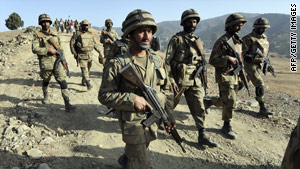
The Pakistani army is conducting an intense operation to rout militants from their haven along the country's border with Afghanistan. The militants, in turn, have launched a series of deadly attacks in retaliation.
Answering a question from a reporter who asked whether the government will engage in dialogue with the Taliban in South Waziristan, Gilani said the operation was over.
"There was talk of dialogue even during the Malakand Operation. But now, the operation in South Waziristan is over. In fact, at the moment, there is talk of an operation in Orakzai Agency," he said.
Malakand is another operation that the military is conducting in another region. Orakzai is one of seven districts that make up the Federally Administered Tribal Areas of Pakistan. Like South Waziristan, it is also considered rife with militants.
Gilani's comments, made in the eastern city of Lahore, were aired on national television. But hours later, he backtracked.
"It could have been in a different context," he told reporters in Karachi. These remarks were also aired on television.
Gilani also declined to say when the offensive might end.
"We will take military action wherever we get information about the presence of militants," he said.
When reached for clarification, the prime minister's office pointed CNN to the second statement.
The army did not comment on Gilani's remarks. A release it sends out daily made no mention of an end to the offensive on Saturday.
Instead, Saturday's release provided the usual breakdown of operations in various parts of the country, including South Waziristan.

Sunday, December 13, 2009

Iran exchange Uranium for Fuel


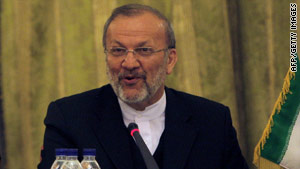
Iran is ready to give up some enriched uranium in exchange for fuel that would power a reactor used in cancer research, the country's foreign minister said Sunday, according to Iranian media. "We have explicitly declared that Iran is ready to exchange some 400 kilograms of 3.5 percent enriched uranium in Iran's Kish Island and receive 20 percent enriched fuel," Manouchehr Mottaki said, according to state-run Islamic Republic of Iran.
The report offered no further details on the plan.
The United States and other leading nations have been negotiating with Iran to send low-enriched uranium abroad, where it would be turned into material for use at the reactor.
The International Atomic Energy Agency, the U.N. nuclear watchdog, has proposed that Iran send low-enriched uranium to Russia and then France for processing.
But a senior State Department official told CNN Iran's proposal does not appear to be consistent with the IAEA draft agreement.
"The terms of that agreement call for Iran to send 1,200 kilograms of its low-enriched uranium to Russia in one batch, where it would be further enriched and then sent to France for fabrication into fuel assemblies," the official said.
"We remain committed to these terms. Unfortunately, Iran has been unwilling to engage in further talks on its nuclear program.
"The draft agreement reflects an extensive effort by the IAEA, Russia, France and the United States to respond positively to Iran's request for fuel for the Tehran Research Reactor, which produces medical isotopes," the official said.
"It also offers an opportunity for Iran to begin to build confidence in the peaceful nature of its nuclear program. We urge Iran not to squander this opportunity."
The deal could reduce the amount of material Iran has to make a nuclear bomb. America and some of its allies fear Iran's goal is to produce a nuclear bomb, but Tehran has insisted its nuclear program is only for peaceful purposes.
Mottaki, attending the Manama Security Meeting in Bahrain, said Iran has fully cooperated with the IAEA and is ready to continue its "constructive cooperation" with the so-called "P5+1" -- the United States, Russia, China, Britain, France and Germany, according to IRIB.
Nuclear weapons have no place in Iran's defensive doctrine, he said, and Tehran believes the era where nuclear weapons were effective leverage has come to an end, IRIB reported.
Last month, the IAEA board passed a resolution demanding that Iran stop construction on a once-secret nuclear enrichment facility near the Iranian city of Qom.
Thirty-five countries, including Russia and China, backed the measure, which also demanded that Iran stop uranium enrichment, which can be used for producing fuel for a nuclear weapon. Russia and China previously had resisted the push for imposing stronger sanctions on Iran.
In the wake of that resolution, Iran announced its Cabinet had authorized the construction of 10 new nuclear production facilities.
The White House warned Iran earlier this month it faces further sanctions if it does not abandon its enrichment activities and "forsake their nuclear weapons program," spokesman Robert Gibbs said.
The outgoing head of the IAEA, Mohamed ElBaradei, told CNN's Christiane Amanpour last month that timing is the top issue delaying a nuclear deal between Iran and the international powers.
Rather than sign on to the draft agreement outlining the swap plan, he said, Iran wants to ship out low-enriched uranium and simultaneously get back more enriched material, which would enable it to receive the fuel more quickly, ElBaradei said.
In his final report to the IAEA's governing board, ElBaradei said the agency had been able to verify that no known stocks of nuclear fuel had been diverted from authorized uses in Iran. But, he said, inspectors "have effectively reached a dead end" without further cooperation from Tehran.
On Sunday, Iran's parliament speaker, Ali Larijani, said in an address to lawmakers that ever since the 1979 Islamic Revolution, Iran has been targeted by enemies of Islam, including the United States and its allies.
"Mr. Obama's cheap remarks about IRI's (Islamic Republic of Iran's) internal affairs, as well as U.S. minister of state's statements accusing Iran of supporting terrorism all reveal their worries about IRI's increasing influence in the region," Larijani said.
On the nuclear issue, he said the United States and others don't want Iran to continue its nuclear activities under the framework of the IAEA.

Wednesday, December 9, 2009

Is it the roots of Pakistan?


David Headley, the Chicago, Illinois, man appearing in court Wednesday in connection with terror attacks in India, was born Daood Gilani, the son of a prominent Pakistani broadcaster, according to his half-brother.
He grew up in both the United States and Pakistan, with a parent from each country.
Headley's father, Syed Saleem Gilani, was working for the U.S.-government-funded Voice of America when Headley was born in 1960 in Washington, his half-brother Danyal Gilani said in a statement.
Headley's mother was American, and his parents divorced after they moved to Pakistan together, not long after Headley was born, his half-brother said. He did not name the mother.
His mother returned to the United States, but Headley remained in Pakistan, his half-brother said, citing "family elders." Headley went to high school at the Hassan Abdal Cadet College in Pakistan, Gilani and an FBI complaint against Headley indicate.
At some point after high school, Headley moved back to the United States to be with his mother, and has had little contact with his Pakistani family since then, Gilani said.
Gilani last saw Headley, whom he still refers to as Daood, "when he visited Pakistan a few days after my father's death, nearly a year ago."
He got a Social Security number in Pennsylvania sometime in the late 1970s, public records show.
He changed his name from Daood Gilani to David Headley on or about February 15, 2006, in Philadelphia, Pennsylvania, in order to present himself in India as an American who was neither Muslim nor Pakistani, according to the criminal complaint against him.
"His having another name or changing his name at some stage in life has come as a surprise to me. He has four kids and a Pakistani wife who also live in the United States," said Danyal Gilani, a public relations officer for the Pakistani prime minister's office.
He issued a long statement last month distancing himself from his half-brother, in response to reports in the Indian press trying to link Headley to Pakistan's prime minister, whose last name also is Gilani. But Danyal Gilani said his family was not related to the prime minister, Yousuf Raza Gilani.
Headley was arrested by federal agents on October 3 in Chicago, accused of helping plan terror attacks against a Danish newspaper that ran cartoons of the Prophet Mohammed, sparking Muslim anger worldwide.
He was later linked to the bloody four-day terrorist siege in Mumbai, India, in November 2008 in which 160 people were killed.
The Justice Department accuses him of attending terrorism training camps in Pakistan in 2002 and 2003, and working with the group Lashkar-e-Tayyiba to carry out terror attacks.
The United States lists Lashkar as a terrorist organization. India blamed the group for the Mumbai attacks.
At the time of his arrest October 3, Headley was on his way back to India to plan a second attack, a source close to the investigation said. Headley is cooperating with the authorities investigating both terror plots, the Justice Department has said. His lawyer did not dispute that. Abdur Rehman Hashim Syed, a retired major in the Pakistani military, was also charged with conspiracy in planning to attack the Danish newspaper. So was Tahawwur Hussain Rana, whom U.S. authorities identify as a Pakistani native and Canadian citizen who lives mainly in Chicago.
Headley said he worked for First World Immigration Services, a company owned by Rana, though authorities have said in court papers that surveillance showed that he "performs few services" for the company.

Friday, December 4, 2009

Obama's Plans for Afghanistan


Secretary of State Hillary Clinton rejected suggestions Friday that the Obama administration plans to abruptly cut and run from Afghanistan.
She emphasized that the transition to total Afghan power will be gradual and responsible.
"I want to make clear to the people of Afghanistan and Pakistan that we're looking for a long-term partnership," said Clinton, speaking with CNN's John Roberts in a wide-ranging interview about U.S. policy toward Afghanistan and Pakistan.
When President Obama announced sending 30,000 more troops to Afghanistan, he said he intended "to begin the transfer of our forces out of Afghanistan in July of 2011" in a responsible transition that considers "conditions on the ground."
Questions were raised about whether such a time frame was long enough to get the job done.
Clinton defended the policy, stressing the conditions-based aspect of the plan and stressing that if it is carried out responsibly, security duties could start being transferred gradually to Afghan forces in some locales, and U.S. troops could begin returning home.
Attending the NATO foreign ministers meeting in Brussels, Clinton said the plan combines a swift show of force and a "sense of urgency." She said Afghan President Hamid Karzai and several NATO foreign ministers agreed with the approach.
"We are going to be looking at all 34 provinces. Some are ... ready to be transitioned, in our opinion, now. [In] others, there's heavy combat going on," she said.
Clinton outlined three facets of the Afghan policy: Fighting, training and civilian engagement.
"There are combat troops, people who are there fighting the Taliban, reversing their momentum. There are trainers of both the security forces, including the army and police. We imagine that their mission will continue. And then there are the all the civilian efforts, which we intend to make a long-term commitment to continuing."
But she said that United States won't de-emphasize its involvement in the region as it and other countries had after the 1980s -- when the United States helped mujahedeen fight the Soviets who controlled Afghanistan at the time.
"Our analysis of what happened in Afghanistan and Pakistan very clearly demonstrates not only that the United States, but the international community, just sort of said, 'OK, the job is done, Soviet Union is gone.' And we walked away, leaving a very difficult and increasingly dangerous presence in both Afghanistan and Pakistan," she said.
The tenacious Taliban and al Qaeda are the entities that the international and Afghan forces are trying to corral in battle. But one tack mentioned recently is diplomacy with the Taliban itself.
Asked about Karzai's comment that he would be willing to hold talks with Taliban leader Mullah Omar, Clinton said she is "skeptical about that" but it's still "worth exploring."
"We have no evidence that Omar is interested in speaking to Karzai or anybody else. If they were willing to speak, that would denote a dramatic 180-degree change from where they've been.
"Remember the U.S. government asked Mullah Omar to give up the [Osama] bin Laden leadership of al Qaeda after we were attacked on 9/11. If they had done so, we would not be in Afghanistan today."
Clinton said there needs to be a "distinction between the potential reintegration of a lot of the people who are part of the Taliban" but aren't hardcore. She said people who would be reintegrated into society from the battlefield would have to renounce al Qaeda and get on board with the post-Taliban Afghan political system.
A major part of the fight in Afghanistan is the battle against militants in neighboring Pakistan, where -- as Clinton says -- "terrorists go back and forth" across a "porous border" for safety.
"We can't let Afghanistan become a failed state, because then, Pakistan would then be under greater pressure than it is today, from insurgents within its own borders.
"And we want to work with Pakistan to be able to root out, capture and kill the al Qaeda leadership and their allies. So this really is a regional strategy. It is integrated to be more effective than what we've seen before."
Asked about reports that the United States is conducting a secret war in Pakistan with drone strikes, Clinton said, "if there is such a secret program, of course, I'm not going to talk about it."
But she said there is "increasingly close cooperation between our two countries -- Pakistan and the United States -- against a common threat and a common enemy" and noted that such ties didn't "exist when President Obama took office."
"There are many elements to a war against terrorists. There is, as we are doing now in Afghanistan, a very direct confrontation. As we see in Pakistan, there is support which the United States and others are providing to the Pakistani military and government. So there are many different tools in the tool box," she said.
In the past, Clinton said, the Pakistani power structure regarded militants in the country as useful, but she said she believes that kind of attitude is ending, illustrated by the Pakistani military's offensives in the Swat Valley and South Waziristan this year.
Asked about talk that Mullah Omar and bin Laden are in and around Pakistan, Clinton said, "We're taking that very seriously. And we've had eight years. They should have never gotten out of Afghanistan in the first place.
"But if I could dial the clock back, I think everybody would see different decisions made. But where we are today is an Afghan-Pakistan awareness that these militants are threatening both, and we're going to see more action, I believe, from the Pakistanis, to confront that."
Clinton also said there have been efforts to halt funding of militants from private sources in the Gulf states.
"We have really good evidence that we've begun to cut off the funding sources. But look, money is fungible, money doesn't necessarily go into a bank and then get cashed. It gets carried in bundles of cash by couriers to al Qaeda in their safe haven. So we know that this is an area that needs more help, but we've gotten some good progress there, too. "
Asked how she defines success for Afghanistan, Clinton says it's "broader than a military victory."
"Success is a stable, secure, and peaceful ... Afghanistan -- able to defend itself and provide a democratic, positive future for their people," she said.
Disarmament of militants and the creation of "one legitimate source of military power" are objectives.
"And that's a long way from being possible in Afghanistan. But those are the kinds of goals that we are working towards."


Thursday, December 3, 2009

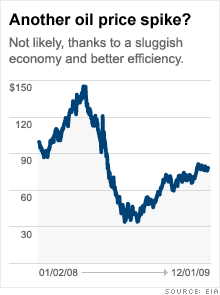
Imagine Oil prices stop point?


"With oil supplies rising and the economy becoming ever more efficient, a super-spike in prices is looking increasingly unlikely"

Because oil prices have always been directly related to the strength of the economy, a recovery might have seen headlines like these:

• The recession ends: Get ready for $100 oil

• The economy roars: $140 oil, is there an end in sight?

• Everyone in China buys a Cadillac: World tapped out

But a growing number of experts are saying that you can forget all that. For the next couple of years, they say, oil prices will remain well below $100 a barrel as the economy remains fragile and efficiency measures kick in.

"The world will never run out of oil," Deutsche Bank analysts wrote in a recent research note, echoing the old logic that the Stone Age didn't end because the world ran out of stone. "If the oil age does end, it likely will be because we become more efficient and simply use less petroleum."

It's this "becoming more efficient" idea that the Deutsche Bank analysts use to predict even lower oil prices in 2010 than now - an average of $65 a barrel next year compared to nearly $80 currently.
'Drill baby, drill'...no more

To get there, they employ a metric known as energy intensity, which basically measures the amount of oil used in relation to the size of the economy. (Keep an eye on this term in the next couple of weeks - countries at the upcoming Copenhagen summit on climate change will use it to try to wiggle out of making any hard commitments on cutting greenhouse gases.)

The energy intensity of the U.S. economy has actually dropped by about 2% a year every year since the early 1980s. In the next couple of years Deutsche Bank expects it to decline by around 3% as people buy more fuel efficient cars and respond in other ways to the high prices of 2004-2008 and as government conservation measures kick in.

With economic growth expected to remain at a sluggish 2.5% or so over the next couple of years, that translates into an actual drop in U.S. oil consumption.

"US oil demand may have already peaked," the note said.

The bank's numbers aren't far off from what the government is saying either.

U.S. oil consumption, which peaked at almost 21 million barrels a day in 2005, is now under 19 million barrels a day, according to the Energy Information Administration.

"The last time we had a decline in consumption of this magnitude was 1979-82," said Tancred Lidderdale, an oil analyst at EIA. U.S. oil demand isn't expected to near 21 million barrels a day again until 2029.

Tuesday, December 1, 2009

Nuclear threats to Iran


Iran will take legal action over infringements on its rights to develop nuclear power, the country's foreign minister said Tuesday, a day after the country announced plans to build 10 new nuclear plants.

"We will not do away with our rights," Foreign Minister Ramin Mohnmanparas said at a news conference, without clarifying what legal action meant.

He did say that Iran would write letters of protest to nations that backed a U.N. resolution of rebuke over Iran's nuclear program.

Mohnmanparas accused such countries of politicizing nuclear fuel as a way to meddle in his country's domestic affairs.

"We will elaborate on why their decisions were incorrect, and how to correct and what the consequences might be," he said of the letters.
The U.N.'s nuclear watchdog, the International Atomic Energy Agency, on Friday passed a resolution demanding that Iran stop construction on a once-secret nuclear enrichment facility in the Iranian holy city of Qom. Twenty-five countries backed the measure, which also demanded that Iran stop uranium enrichment, which can be used for producing fuel for a nuclear device.

In the resolution's wake, Iran's state news agency reported Sunday that the nation's Cabinet had authorized the construction of 10 new nuclear production facilities.

At Tuesday's news conference in the Iranian capital, Tehran, Mohnmanparas said his country needs nuclear fuel from the plants to meet its long-term energy needs, to move toward self-sufficiency.

"The plans we have, we will push our plans ahead," the foreign minister said. "We will adhere to IAEA framework and under their supervision.

"We remain committed to the NPT," he added, referring to the 1968 Non-Proliferation Treaty, which bars member states from pursuing nuclear weapons and requires international inspectors to have access to nuclear facilities. The treaty gives Iran the right to produce nuclear fuel, Iran says.

Tehran says the plants authorized Sunday would produce enough enriched uranium to yield about 20,000 megawatts of electricity a year. Iran currently has one nuclear power plant, which has yet to begin full operation.

By comparison, 65 nuclear power plants in the United States produced about 800,000 megawatts of power in 2007, according to the U.S. Department of Energy.

In his final report to the IAEA's governing board, outgoing Director-General Mohammed ElBaradei said Thursday that the agency has been able to verify that no known stocks of nuclear fuel have been diverted from authorized uses. But he said inspectors "have effectively reached a dead end" without further Iranian cooperation.

Susan Rice, the U.S. ambassador to the United Nations, said Monday that, in the United States' view, "as Iran makes choices that seem to indicate that it is not at this stage ready and willing to take up the offers on the engagement track, then we will put greater emphasis on the pressure track."

The "pressure track" is often code language for the pursuit of further U.N. Security Council sanctions.